Software licensing
C# Software Licensing: Protecting .NET Applications Without Hard-Coded Secrets
Learn how to design C# software licensing with remote validation, secure file delivery, device binding, and server-side configuration.

C# software licensing should protect the application after installation
C# applications need a licensing system that can validate customers, control entitlements, deliver updates, and respond to abuse after the installer has been downloaded. Putting API keys, license rules, and sensitive resources directly into the client creates a fragile trust boundary.
Use the client for interaction, not as the source of truth
The client can collect a license key, device identifier, and application context, but the server should remain the source of truth for entitlement and policy. This makes revocation, plan changes, session controls, and customer support workflows easier to manage.
Server-side variables and secure file delivery
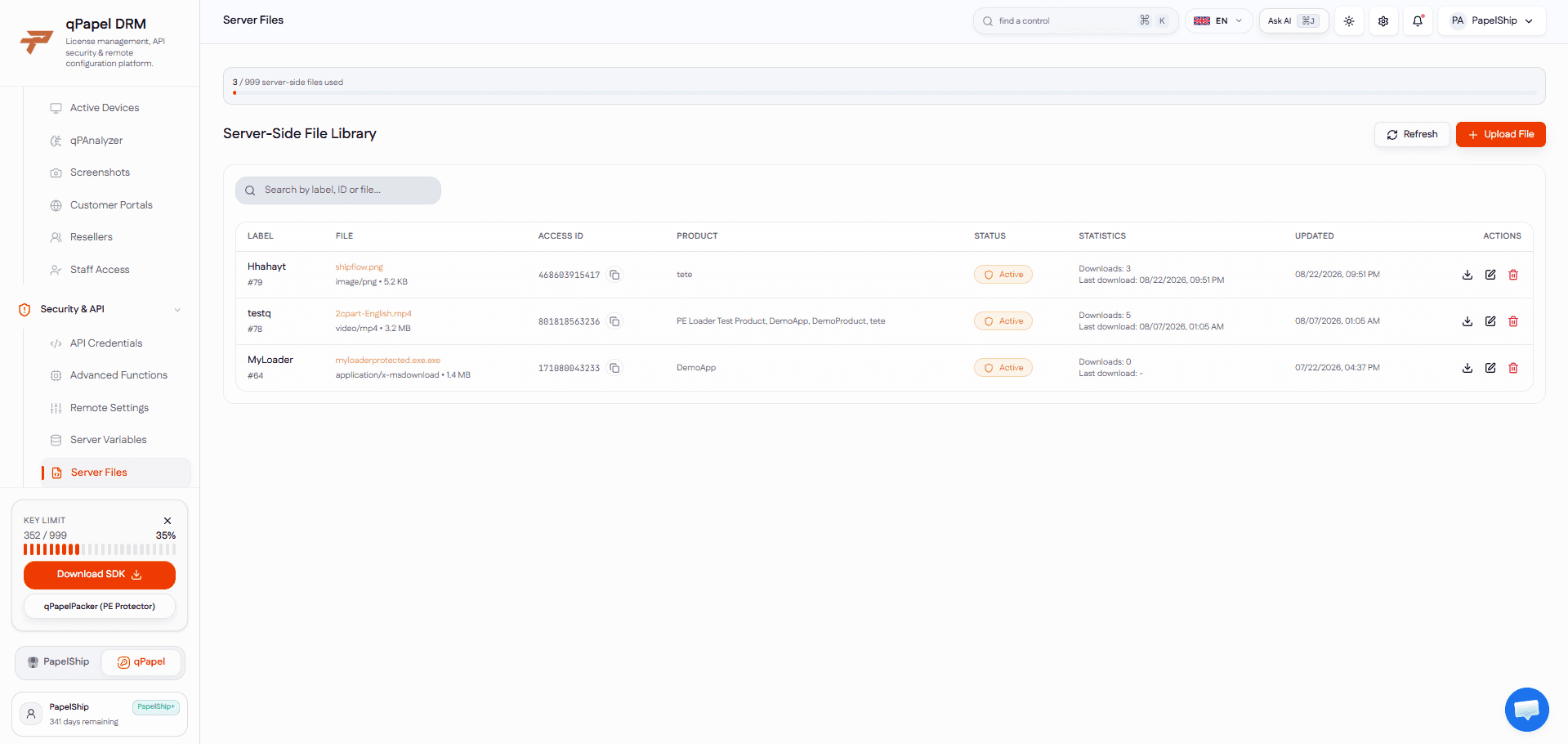
Server-side variables keep sensitive URLs, cryptographic material, and protected configuration away from ordinary client files. Secure file execution can then stream verified resources to an authenticated session instead of leaving every important asset permanently available on disk.
Where qPapel Auth fits
qPapel Auth gives C# teams a foundation for remote settings, key generation, device binding, access levels, and risk-based responses. The goal is not to make licensing mysterious; it is to make the software commerce layer observable, adjustable, and harder to bypass casually.


